Air sealing services in Sun Valley NV - the hidden leaks found and sealed
Drafty rooms, a hot upstairs or cold floors usually trace back to gaps you can't see. We find them and close them off.
I come out and write the estimate
I'm usually the one who comes out to look at your house and write the estimate. I'm known for saying plainly what your home needs first and what can wait, and I'd rather tell you a job isn't worth doing.
In business in Sun Valley since 2023
I started this company here in 2023 after learning insulation on job sites beside experienced installers. Before that I ran a small business of my own, so I know what it means to watch every dollar.
Licensed and fully insured on every job
We're licensed and fully insured, and our install crew works with a lead installer on site, so there's one person to ask while the work is going on. To get started, call (775) 447-1132 or use the form below.
Air sealing for Sun Valley homes
Air sealing services in Sun Valley close the gaps between the rooms you heat and cool and the attic or crawl space beyond them. It helps homeowners with drafty rooms, cold floors or a hot upstairs, here and across Reno, Sparks and the cities around them.
Most of the air behind a drafty room or a hot upstairs gets in through openings you never see. They sit around light fixtures, the boots where ducts meet the ceiling, wiring, plumbing pipes and flues, and most of them are buried under the attic insulation. Narrow gaps take caulk or foam, and bigger openings get rigid blocking sealed in place, so air stops trading places between your rooms and the attic or crawl space.
Price comes down to how many openings your house has, how easy the attic is to get around in, and whether old insulation has to come out so we can reach the leaks under it. Safety sets the schedule. If a furnace or water heater vents by natural draft, a combustion safety test checks that its exhaust isn't spilling back into the house, and any problem gets fixed before attic work starts. Your written estimate gives you the figure for your house.
Air sealing and the insulation work around it
Easy gaps you can seal yourself
When I come out, I'll point out the easy gaps, the ones around door frames and where pipes, vents and wires pass through outside walls. A tube of caulk or a can of foam handles most of those, so there's no reason to pay us for them. Your money goes into the leaks that are hard to find and harder to reach, which usually means the attic, where years of insulation hide the gaps from anyone walking through.
Hidden leaks in the attic and below
Up top, we move the insulation aside where leaks hide, seal each opening, and put it back level so the edges aren't left thin. Eave vents stay clear so the attic can still breathe. If the old insulation is soaked or full of droppings, I'll tell you it should come out first, because fresh material over it keeps the problem. Down below, the gaps where framing sits on the foundation leak too, and sealing them comes before any basement insulation.
Foam or caulk and loose fill
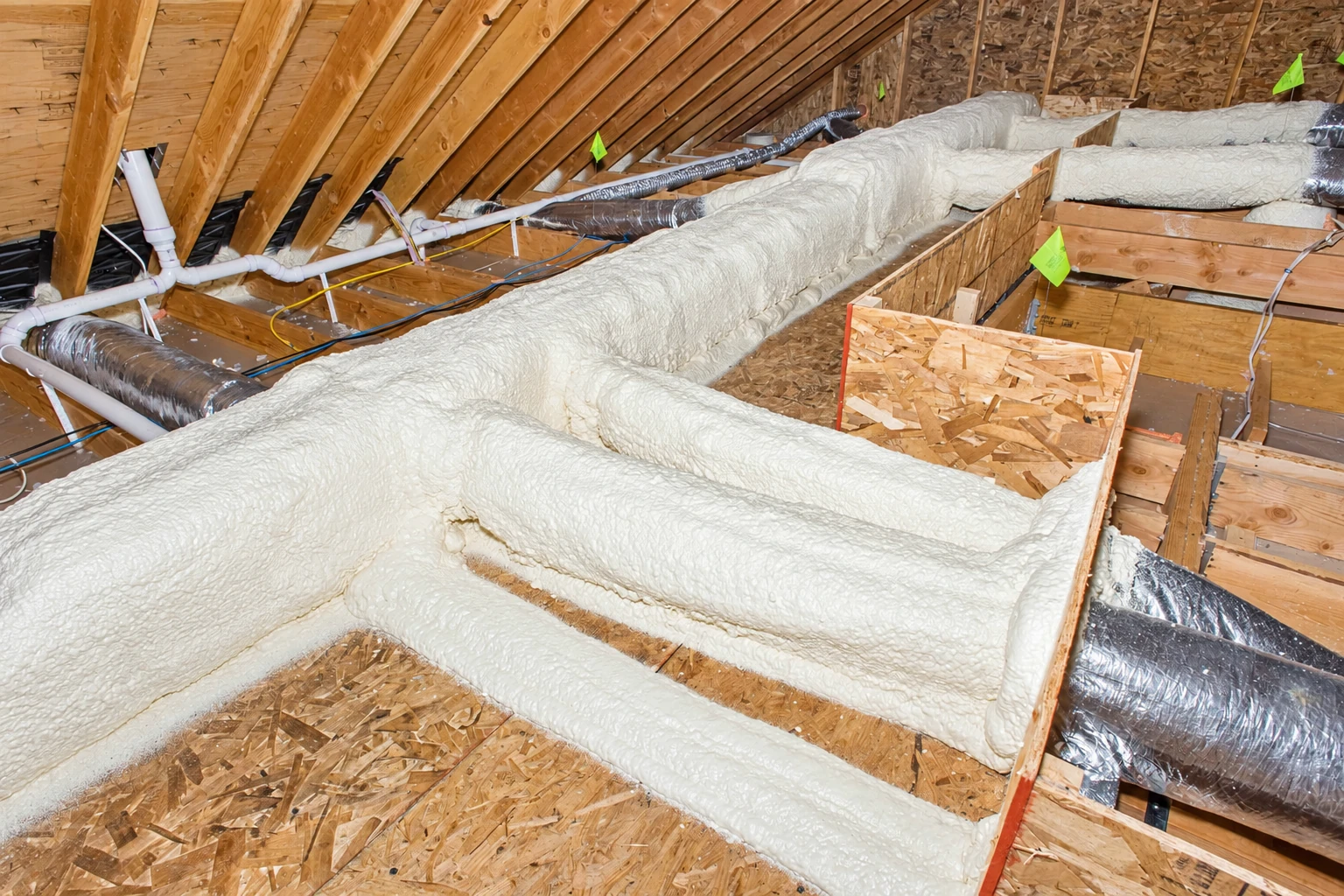
Spray foam seals air and insulates in one step, but it costs more. For most attics, sealing the gaps and topping up the blown-in insulation, the loose fill that goes in through a hose, gets you more for the money, and that's what I'll usually suggest. The exception is when your ductwork runs through the attic. Then closed-cell foam insulation, a dense foam that also blocks moisture, can make sense, and I'll walk you through why.
A free air sealing estimate at your house
We reply within one business day to set up a time, and the estimate at your house is free with no obligation. It helps to tell us the age and type of your attic insulation and any fuel-burning appliances.
(775) 447-1132How an air sealing job goes
Call or send us a note
Call (775) 447-1132, use the form or email quotes@sunvalleysprayfoaminsulation.com and we'll set a time for me to come out. Tell us what you're noticing, a drafty room, cold floors or a hot room over the garage, so I know where to start looking.
I look at it with you
I go through the attic and the rest of the house with you and tell you right there what I'd fix first and what can wait. Then I follow up with a written estimate, so you can decide on your own time.
We seal, clean up, walk through
Once you say go, we set the date and take care of any permit the work calls for. Our crew does the sealing and cleans up, and then we walk through the finished work together.
Air sealing questions from Sun Valley homeowners
How do professionals find hidden air leaks in a house?
Energy pros find hidden leaks with a blower door test, a fan in a doorway that pulls air through the gaps, and a thermal camera that shows where outside air is getting in. That points the sealing at leaks a walk-through would miss. Ask a contractor whether the crew holds a BPI Building Analyst or RESNET HERS Rater certification.
Should I air seal my attic before adding new insulation?
Yes, seal first, because air sealing done before insulating gets the most energy savings out of the job. Fiberglass and other fibrous insulation slow heat but aren't an air barrier, so air keeps moving through any gap they cover. If new attic insulation is on your list, schedule the sealing ahead of it and we can plan both together.
Do I need a permit for air sealing in Sun Valley NV?
Your job may need one, because Washoe County requires a building permit for any project that isn't on its list of exempt work. The county takes questions at building@washoecounty.gov. Before work starts, we confirm which office covers your address, the county or a city, so the permit question is settled before anyone climbs into the attic.
Can a handyman do small air sealing jobs in Nevada without a license?
Sometimes, if the job is small enough. The Nevada State Contractors Board exempts repair or maintenance work worth less than $1,000, counting labor and materials, unless certain conditions apply, such as the job needing a building permit. If you're sealing a house you live in yourself, not one meant for sale or lease, the board has a separate owner exemption with its own conditions and an application.