
Retrofit insulation in Sun Valley NV - warmer rooms in the house you already own
Drafty rooms and cold floors in an older house usually mean thin insulation. We find what to fix first and start there.
I come out and look myself
I'm usually the one who comes out, looks at your attic and walls with you and writes the estimate. You get the plan from the person who made it, not from someone reading off a price sheet.
What to fix first, said plainly
I ran a small business before starting this one in Sun Valley in 2023, so I know what a dollar means. In three years we've become known for saying what your home needs now and what can wait.
We're licensed and fully insured
Your satisfaction, guaranteed. When you're ready, call (775) 447-1132 or use the form below, and tell us roughly how old the house is, which rooms bother you and whether new siding is coming.
Retrofit insulation for older Sun Valley homes
Retrofit insulation means adding insulation to a house that's already built, usually blown into the attic floor or into the walls without tearing them out. It helps Sun Valley homeowners with drafty rooms, cold floors, a hot upstairs or an older house that never had much.
Most older houses I look at here have the same story. A drafty bedroom, cold floors, a room over the garage nobody wants to sleep in, and a power bill that keeps climbing. Often the attic has little or no insulation. The first call is where to start, the attic, the walls or both, and that turns on what's up there now and what else you're planning for the house.
Price comes down to how much insulation you already have and how much of the house you're doing. Old material that has to come out, many gaps to seal or adding the walls all raise it. The schedule turns on the same things, plus any permit and your siding plans. My written estimate lays out your number and what I'd do first. We work from Sun Valley across Reno, Sparks, Spanish Springs, Cold Springs, Carson City, Fernley and nearby cities.
Retrofit insulation for attics, walls and older homes
Filling the attic out to the edges
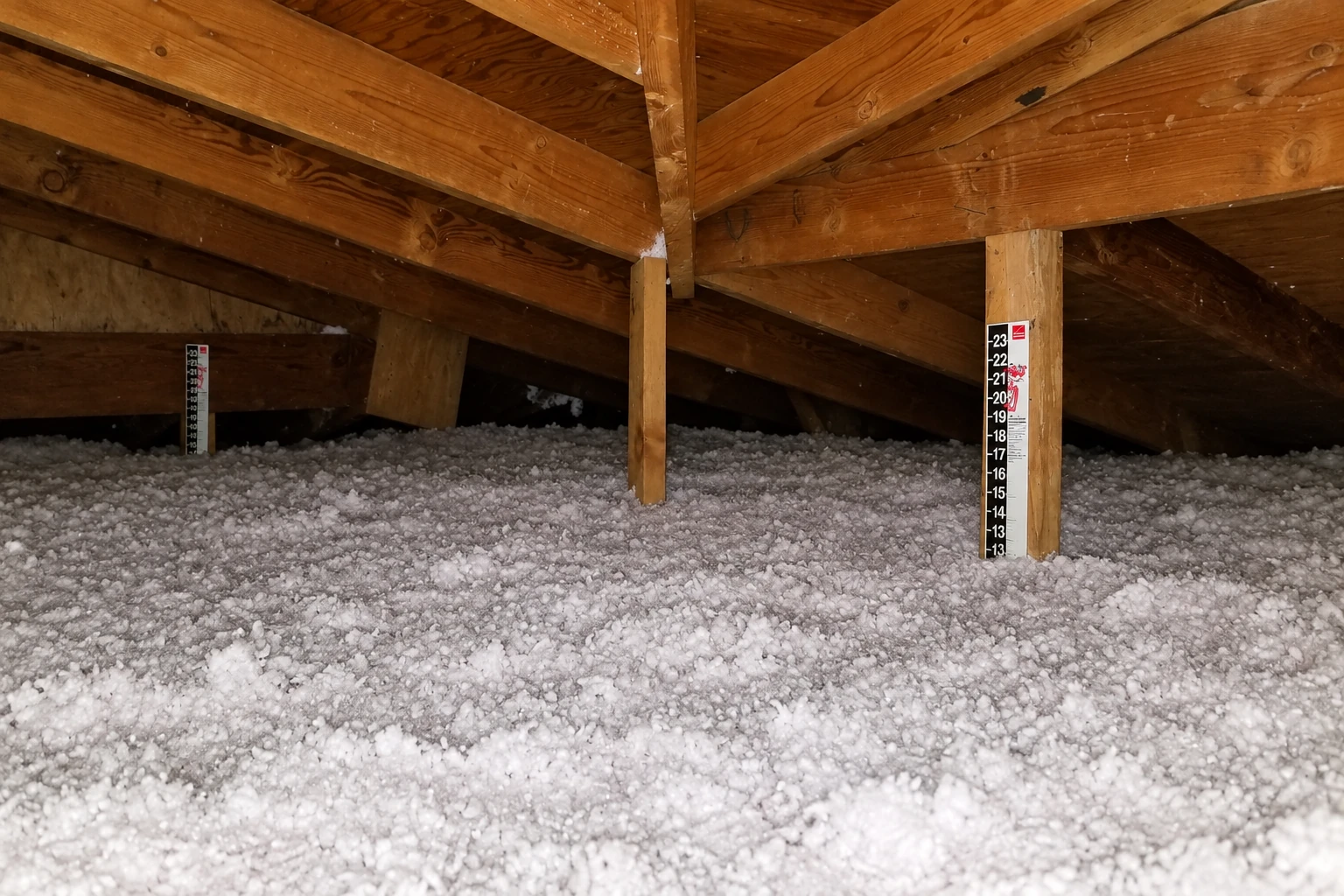
Most jobs start with attic insulation, since it's usually the easiest place to add insulation to a finished house. If the old material is soaked or full of droppings, it comes out first so the problem doesn't get buried. We blow in loose fill, sent through a hose, all the way to the edges of the ceiling, with baffles that keep the eave vents clear so the attic keeps breathing. Spray foam insulation seals air while it insulates but costs more, so unless your ductwork runs up there, I'll usually suggest sealing the gaps and topping up loose fill instead.
Doing the walls with new siding
If you're planning new siding in the near future, that's when I'd do the walls. With the old siding off, we can blow insulation into each wall cavity from outside and leave your rooms alone. It's also the time to check the house wrap, the layer behind the siding that sheds water, or add one if it's missing. So when siding is on your list, I'll suggest doing the walls at the same time rather than paying to get into them twice.
Older houses get checked first
Some older houses come with conditions that decide where insulation can go, so I ask about them before I write it up. If your house has knob and tube wiring, the old wiring strung on porcelain knobs, a federal guide reads the electrical code as not allowing insulation on or around it, so we plan around it from the start. If your home was built before 1980, you should be aware of lead safety rules, depending on how much the work disturbs the walls inside or out. Better to sort that out at the estimate than halfway through the job.
Get a written plan for your attic and walls
We'll reply within one business day to set a time for me to come out, look at your attic and walls with you, and follow up with a written estimate. It's free, and there's no obligation.
(775) 447-1132What happens after you call us
I come out and look
After you reach us, I come out and look at the attic, walls and any crawl space with you. I'll tell you right there what I'd do first, then follow up with a written estimate.
We set a date
When you say go, we set the date and take care of any permit the work calls for. Before the crew arrives, we'll let you know which rooms we need to get through and what should be moved.
The crew installs and cleans up
Our crew does the work with a lead installer on site, then cleans up. At the end we walk through it together, so you can see what went in and ask anything before we call it done.
Retrofit insulation questions in Sun Valley
How much does attic insulation usually cost?
Attic insulation across the US usually costs about $1,700 to $2,500 per job. That's a national figure for the attic alone, not our price. Yours depends on your attic, and wall work is priced separately, so I'll put your own number in writing after I see the house.
Do I need a permit for insulation in Washoe County?
You might. Washoe County requires a building permit for any project that isn't on its exempt list, and projects filed there follow its current adopted building codes. Before work starts, we check which office covers your address, the county or a city.
Can my walls be insulated without opening them up?
Yes. A common way is drill and fill, where small holes go near the top of each wall cavity, the hollow space between studs, from inside or outside, and blown-in insulation fills it. When we work from inside, we protect your floors, keep the dust contained and patch the holes or cover them with a chair rail molding.
What has to happen before attic insulation goes in?
Air sealing, closing the gaps, comes first. In a vented attic, every opening in the attic floor gets closed with sealant, one-part spray foam or rigid blocking, because insulation over open gaps around lights, pipes and the hatch just fights a draft. Stored boxes need to come out too, since they keep new insulation from lying level.