
Closed-cell foam insulation in Sun Valley NV - a sealed layer that fits tight spots
Cold floors over a damp basement or a cramped wall with no room for thickness? Closed-cell foam seals and insulates in one thin layer.
You meet the owner, then the crew
I'm usually the one who comes out and writes the estimate, and a lead installer runs our crew on site. I'd rather tell you a spot isn't worth foaming than sell you a job you don't need.
Started in Sun Valley in 2023
I learned insulation on job sites beside experienced installers and started this company in Sun Valley in 2023. Before that I ran another small business, so I know what it means to watch every dollar and keep a promise.
Licensed and fully insured on every job
We're licensed and fully insured, and that covers every job our crew does, from a basement wall to a small shop. Your satisfaction, guaranteed. To get started, call (775) 447-1132 or fill in the form on this page.
Closed-cell foam insulation in Sun Valley
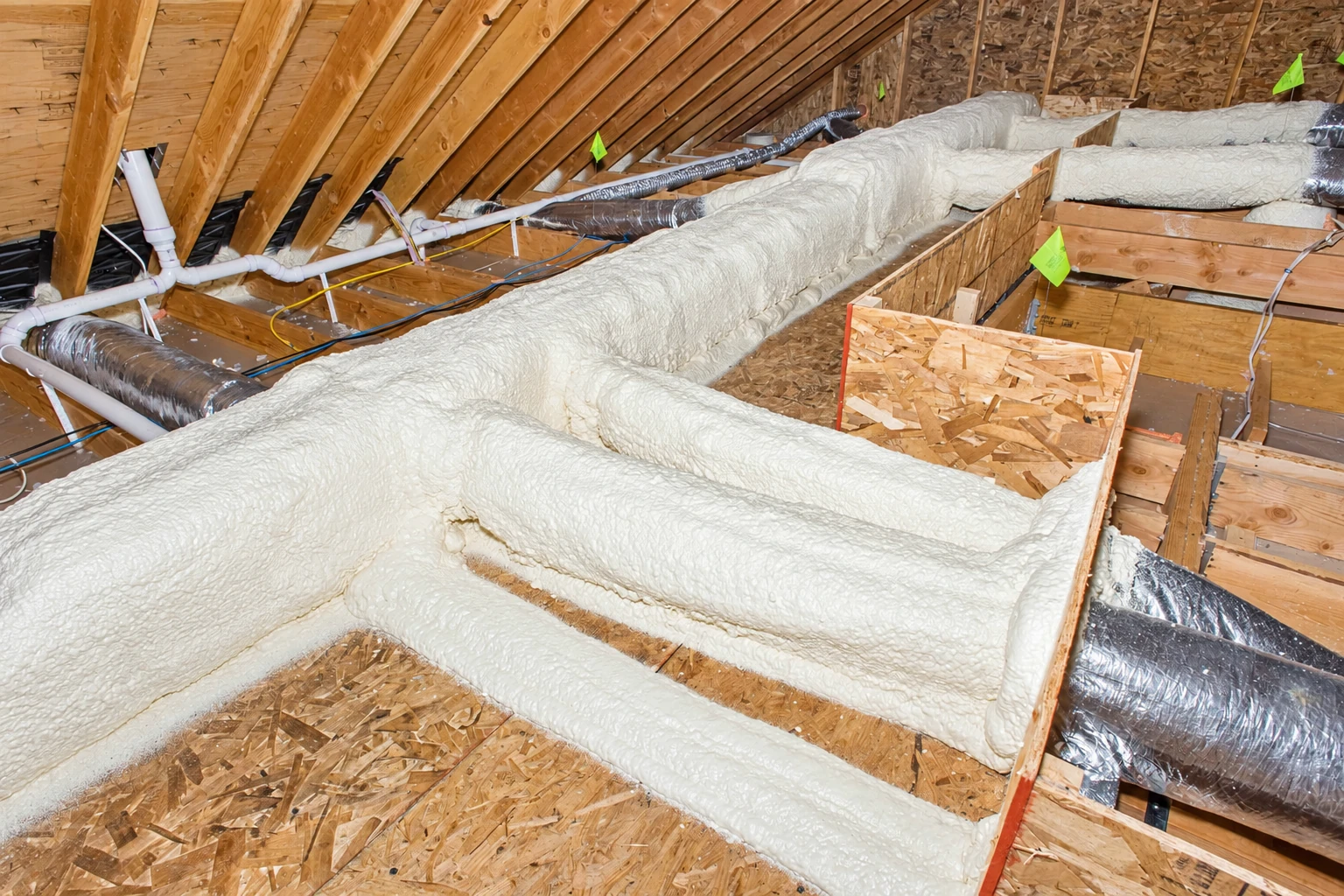
Closed-cell foam is a dense spray insulation that hardens into a rigid layer, and at the usual thickness it stops moisture vapor and won't soak up water. It helps Sun Valley homeowners with cold floors over a basement, a damp crawl space or a wall too thin for much else.
Most calls about closed-cell foam start with one problem spot. It's usually a basement that feels cold and a bit damp, a crawl space under cold floors, or a wall with little room for thickness. The first thing I sort out with you is whether that spot really needs closed-cell, or whether a cheaper fix does the same job. We do this work from Sun Valley across Reno, Sparks, Spanish Springs and the cities around them.
The price moves with how much area we cover, how thick the foam has to be and whether old, wet or dirty material has to come out first. The schedule turns on the date you pick and on the time your household spends out of the house while the foam cures. Your written estimate spells out what I'd do first for your space and what can wait.
Closed-cell foam and the work that goes with it
Basements, crawl spaces and rim joists
We reach for closed-cell where space is tight or a spot might get damp, because it packs a lot of insulation into a thin layer and handles moisture that would ruin other materials. Basements are the clearest case. One older federal guide rates it the preferred choice there, citing research where water-tolerant insulation right against the inside of the foundation wall worked most consistently. On the rim joist, the band of framing where your floor meets the foundation, a thick enough layer seals the air and insulates in one step.
Closed-cell or open-cell, said plainly
I'm upfront that closed-cell costs more than open-cell foam, mainly because it expands less and takes more material to fill the same space, so you can judge whether the spot is worth it. In most attics you get more for the money from air sealing, which closes the gaps around lights, pipes and the hatch, and then topping up the loose fill. The exception is when your ductwork runs up there, because foam seals the air leaks while it insulates.
Checking first, covering it after
Foam sprayed over a problem keeps the problem, so I look for wet spots, droppings and soaked old insulation that need to come out first. One older guide says closed-cell foam in a basement has to be covered by an approved thermal barrier, a fire-resistant covering, while a crawl space not used for storage may only need an ignition barrier such as an approved fire-protective paint. We'll tell you what applies to your space now. Small shop and office owners get the same look through our commercial insulation work.
Get a written closed-cell foam estimate for your space
We reply within one business day to set up my visit, and the estimate at your home is free, with no obligation. Note the area, its rough size and whether it's a basement, crawl space or wall.
(775) 447-1132How a closed-cell foam job goes
I look at the space
After you call or send the form, I come out and look at the space with you. I tell you right there what I'd fix first, then follow up with that plan in a written estimate.
We set the date
Once you say go, we set the date and take care of any permit the work calls for. Before that day, clear the area if you can and plan somewhere to stay while the foam goes in and cures, as the questions below explain.
We spray, clean and walk through
Our crew sprays the foam, then cleans up so the house can air out. When you're back in, we walk through the finished job together so you can see the coverage at the edges, not just the middle.
Closed-cell foam questions from Sun Valley
Is closed-cell or open-cell spray foam better for my home?
Closed-cell is the better pick where space is thin or the spot can get damp, and open-cell costs less where neither matters. Per inch, typical closed-cell foam is rated about R-6 for slowing heat, while open-cell rates about 3.6 and lets moisture vapor through. I'll tell you which fits each spot when I see it.
How much does closed-cell spray foam cost around Reno?
Closed-cell spray foam in the Reno area has usually cost about $1 to $1.50 per board foot, and that's an older figure that may have risen since. A board foot is one square foot of foam one inch thick, so the price climbs with depth as well as area. Your written estimate covers your own space.
Do we have to leave the house while spray foam goes in?
Yes. Federal safety guidance says everyone in the household and any other trades should be out while the foam is sprayed, and come back only after it has cured and the house has been aired out and cleaned. Some makers recommend 24 hours before moving back in, but it varies, so ask us what the maker says for the product we'll use.
Who handles permits and contractor licenses for spray foam in Sun Valley?
We do the permit side. We check which office covers your address, the county or a city, and take care of the permit when your job calls for one, and county permits go through the Washoe County Building Program. The Nevada State Contractors Board licenses contractors by classification, which sets the work each may do, so ask any installer which one they hold.